How Google Decides Who Wins the “Near Me” Search

Three factors. That is the whole system.

Google has publicly stated how local ranking works, which makes local SEO unusual: the rules are not a secret. Relevance, distance, and prominence. Every map pack result is those three factors weighed against each other for that specific search, from that specific location, at that specific moment.

Most businesses lose near me searches not because the system is mysterious but because they never organized their effort around it. Understanding what you control, what you influence, and what you cannot touch is the entire game. Let us take the three factors in order of how much control you have, starting with the one you have none over.

Distance: the factor you cannot control

Where the searcher is standing matters. A plumber two miles from the searcher has an edge over one ten miles away, all else being equal. You cannot move your shop every time someone searches, and service-area businesses cannot game this by claiming a fake address, because Google suspends profiles for that and the penalty far outweighs any temporary gain.

Here is the reframe that matters: distance only decides ties. When two businesses look equally relevant and equally trusted, the closer one wins. Your job is to make sure it is never a tie. Every improvement in the other two factors extends the radius in which you beat closer competitors. Businesses with dominant relevance and prominence routinely appear in map packs across their whole metro, well past nearer rivals. That is the goal.

Relevance: does Google understand what you do?

Relevance is how well your profile and website match the specific search. This is fully in your control, and most businesses handle it badly through simple neglect.

Start with categories. Your primary category should match your core revenue service, and your secondary categories should cover the rest of what you do. Then services: every service you offer should be listed on the profile with a plain description. When someone searches “water heater replacement near me,” Google scans for profiles that clearly signal water heater replacement. A profile that only says “Plumber” is relevant to the generic search and invisible to the specific one, and the specific searches are where the buying intent lives.

Your website carries relevance too. It should say what you do and where you do it in plain language on real pages, not buried in a footer. Service pages for your major offerings give Google, and the buyer, something specific to match. Vague profiles and vague websites lose to specific ones. That is the entire relevance game.

Prominence: does Google trust you?

Prominence is your reputation in Google’s eyes, assembled from signals across the web. You cannot set it directly, but you build it steadily, and it is where the compounding happens.

Reviews drive it more than anything else: count, rating, recency, velocity, and the words inside them. A steady flow of reviews mentioning your services and your city is prominence fuel of the highest grade. Citations support it: your name, address, and phone number consistent across the directories that matter. Inconsistent citations do not just fail to help, they actively erode trust, because conflicting information makes Google less certain about your business. And your website’s overall authority feeds in: links from local organizations, suppliers, industry associations, and local press all count.

Prominence is why a business slightly farther away with 300 strong recent reviews beats the closer one with 12 old ones. Trust travels farther than distance.

The 20-minute self-audit

You can grade yourself on all three factors in one sitting. For relevance: open your profile and check whether the primary category matches your biggest revenue service, whether every service is listed with a description, and whether your website names your services and city plainly. For prominence: check your review count and rating against the three businesses currently in the map pack for your main search, check the date of your most recent review, and search your business name plus phone number to spot citation inconsistencies. For distance: search your main keyword from your shop, then from the far edge of your service area, and note where you fall out of the pack.

That last exercise shows you your effective radius, and the gap between it and your actual service area is the opportunity.

Two myths worth killing

First myth: putting “near me” in your content helps you rank for near me searches. It does not. Google translates “near me” into the searcher’s coordinates. Write for the service and the city, not the phrase.

Second myth: local rankings are fixed and the businesses at the top are untouchable. Map packs are more volatile than organic results precisely because they recalculate by location and freshness. A neglected leader can be overtaken in a season by a business that works all the controllable signals consistently.

The takeaway

You control relevance completely and you build prominence over time. Businesses that lose near me searches almost always lose on those two, then blame their location. Fix the profile, build the review engine, keep the signals consistent, and the map pack follows.

[Internal link: Local SEO page on “signals” / GBP page on “profile”]

FAQ

How does Google rank near me searches?

Google weighs three factors: relevance, distance, and prominence. Relevance measures how well your profile matches the search. Distance measures proximity to the searcher. Prominence measures your reputation through reviews, citations, and website authority. You fully control relevance and build prominence over time.

Can a business rank in the map pack from farther away?

Yes. Distance is only one of three factors. A business with a complete profile, strong review velocity, and consistent local signals regularly outranks closer competitors with neglected profiles. Distance decides ties. Strong relevance and prominence keep it from ever being a tie.

Losing near me searches to competitors down the street? Book a free audit and we will show you why.

GCC High Migration: The Search Demand Almost Nobody Is Capturing

A rising search with almost no competition

CMMC enforcement has pushed thousands of defense contractors toward Microsoft GCC High. These companies handle controlled unclassified information, and their current Microsoft 365 environment does not meet the requirement. They know they need to migrate. Most have no real idea how, what it costs, or how long it takes.

So they search. “GCC High migration.” “GCC High vs Commercial.” “GCC High licensing cost.” “Do I need GCC High for CMMC level 2.” These are not curiosity searches. They are procurement research from companies whose contract revenue depends on getting the answer right.

Now look at who answers those searches. Microsoft documentation that reads like documentation. A few national consultancies writing for enterprises. Almost no MSPs, and almost nothing written in plain language for the contracts manager or owner actually running the search. The demand is real, growing, and largely unclaimed. In SEO terms, this is the rarest situation there is: high buyer intent, low competition, and a rising trend line.

Understand who is actually searching

Effective content starts with a clear picture of the searcher, and here the picture is specific. It is usually not an IT person. Defense contractors in the small and mid-size range often have thin internal IT, which is exactly why they will need an outside partner. The person searching is an owner, a contracts manager, or an operations lead who just learned from a prime contractor or a consultant that their Microsoft environment is a compliance problem.

They are anxious, budget-aware, and drowning in acronyms. Content that meets them there, plain language, honest scoping, no assumed knowledge, wins by default, because nearly everything else they will find assumes an enterprise IT department they do not have.

Why this buyer is worth chasing

A GCC High migration prospect is not shopping for cheap help desk support. They have a compliance deadline tied to contract eligibility, and losing DoD work is an existential threat. That means budget conversations move fast and price sensitivity is lower than anywhere else in the MSP market.

The engagement economics are better too. The migration itself is a substantial project. The environment then needs ongoing management by someone who understands the compliance boundary, which converts the project into a long-term managed services contract almost by default. And a client whose compliance posture you built does not shop around casually. These are larger, longer, stickier relationships than typical MSP deals.

The content library to build

The comparison piece. GCC High vs GCC vs Commercial, written for a contracts manager, not an engineer. This is the highest-volume search in the cluster and the natural entry point. Explain what each environment is for, who is required to use which, and what changes functionally.

The eligibility piece. Who actually needs GCC High and, just as important, who does not. Being publicly honest about who does not need it builds more trust than anything else you could write, because half the market has been scared into overbuying by vendors. The companies you honestly steer away remember you. The ones who do need it trust your yes because they saw your no.

The process piece. What a migration actually involves, phase by phase, how long it takes, what commonly breaks when it is done wrong, and what the business feels during the transition. Buyers fear the disruption more than the cost. Address the fear directly.

The cost piece. Licensing structure and what drives project cost. Buyers search cost questions constantly and almost nobody answers them, because vendors are afraid of being shopped. Answer honestly with ranges and drivers. The buyers who proceed after reading real numbers are qualified buyers.

The FAQ layer. Every one of these pages carries a short FAQ block structured for AI Overviews, because compliance questions are exactly the kind of query AI search surfaces, and the citation goes to whoever answered cleanly.

Common mistakes to avoid

Do not write this content as thin gateway pages stuffed with the keyword. The buyer is sophisticated about their own problem even if not about IT, and thin content reads as bait. Do not copy Microsoft’s documentation into blog form; it already exists and ranks. And do not publish anything your team cannot back up on a sales call. This audience asks follow-up questions, and the content is only as valuable as the expertise behind it.

The window is open now

Low competition keywords do not stay low competition. As CMMC enforcement widens, more providers will notice this demand and the content bar will rise. The MSPs that build this library in 2026 will own these rankings when the rest of the market catches on, and rankings earned early compound: they accumulate the clicks, the engagement signals, and the backlinks that make them harder to displace later. First mover advantage in SEO is real. This is what it looks like before everyone can see it.

[Internal link: Cybersecurity page on “CMMC” / MSP SEO page on “rankings”]

FAQ

Why should MSPs create GCC High content?

Defense contractors facing CMMC requirements are actively searching for GCC High migration guidance, and very few MSPs publish content answering them. These buyers have compliance deadlines, contract revenue at stake, and approved budgets. The keyword competition is low while the buyer intent is exceptionally high.

What GCC High topics do buyers search most?

Comparison searches like “GCC High vs Commercial,” eligibility questions like “do I need GCC High for CMMC,” licensing and cost questions, and migration process searches. Content answering these in plain language for decision-makers, not engineers, captures buyers early in the evaluation.

We build compliance-driven content strategies for MSPs. Book a free audit and see the opportunity in your market

 How a GBP Rebuild Drove 242% More Calls With Zero Ad Spend

he situation

An HVAC company came to us with a familiar story. The phones were slower than they should have been for the size of their market and the quality of their work. They were doing good jobs, keeping customers happy, and watching competitors with worse reputations get more calls.

They had a Google Business Profile. It had been set up years earlier, probably in an afternoon, and mostly left alone since. Some photos from whenever the account was created. A handful of reviews that trickled in on their own. Basic info that was partly outdated. Nobody was doing anything wrong, exactly. Nobody was doing anything at all.

That is the most common state we find profiles in. Not broken. Abandoned. And an abandoned profile does not just underperform. It actively loses ground every month, because Google’s local rankings are competitive, and the competitors are not standing still.

Why profiles decay

Before the rebuild, it is worth understanding why a profile that “worked fine” years ago stops working. Three forces are at play. Google keeps adding profile features, and profiles that ignore new fields look less complete relative to profiles that use them. Competitors keep accumulating reviews, so a review count that was respectable in 2022 is thin now. And Google’s systems reward activity, so a dormant profile gradually reads as a business that might not be fully operational.

None of this shows up as an alert. The profile just quietly slides down the map pack, and the owner experiences it as “the phones are slow.”

What we rebuilt, element by element

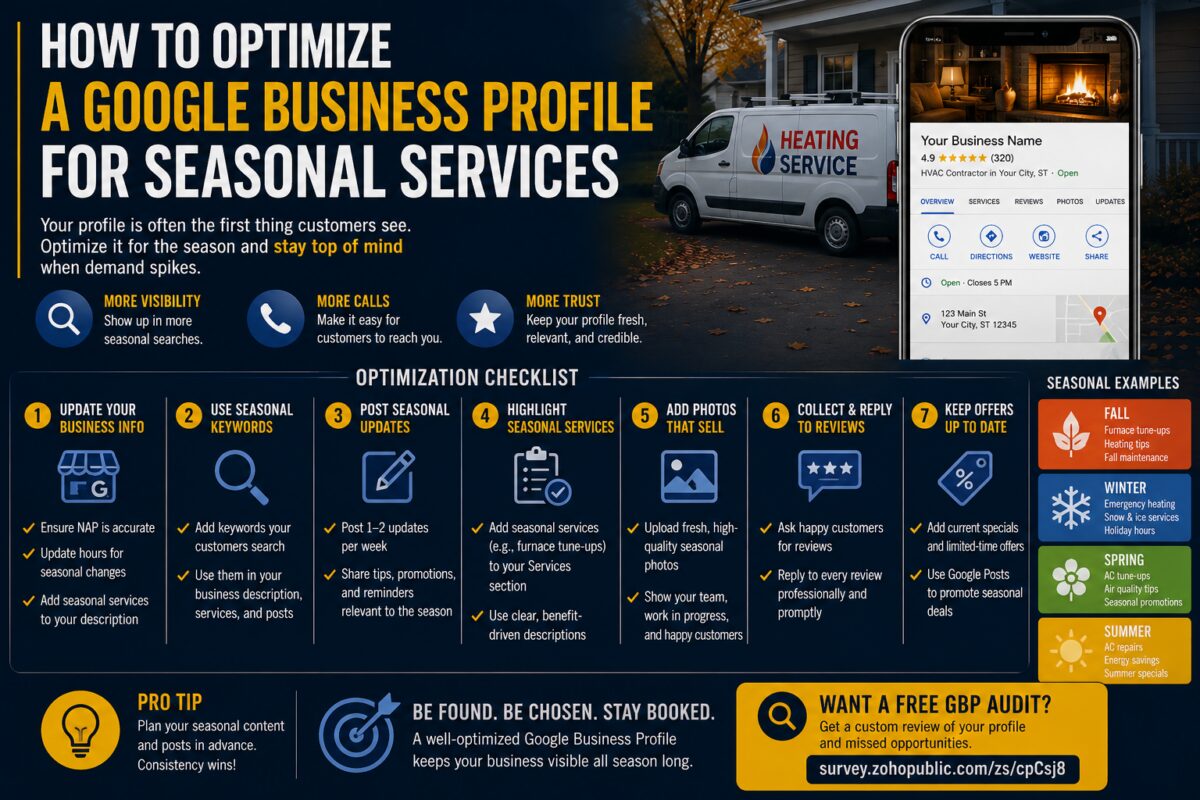
Categories. The primary category was too generic and secondary categories were missing entirely. The primary category is the strongest relevance signal on the profile, so we matched it to the core revenue service, then added secondary categories covering the rest of the business. This alone expands the range of searches the profile can appear for.

Services. Every service the company offers got listed with a description written for search intent. AC repair, furnace installation, duct work, maintenance plans, and the rest, each as its own entry with plain-language descriptions of what is included. Google matches services to searches. Every missing service is a set of searches the profile simply cannot win.

Photos. Real trucks, real techs, real completed jobs, uploaded on a schedule instead of dumped once. Photos do two jobs: they signal an active business to Google, and they answer the legitimacy question for every homeowner who checks the profile before calling.

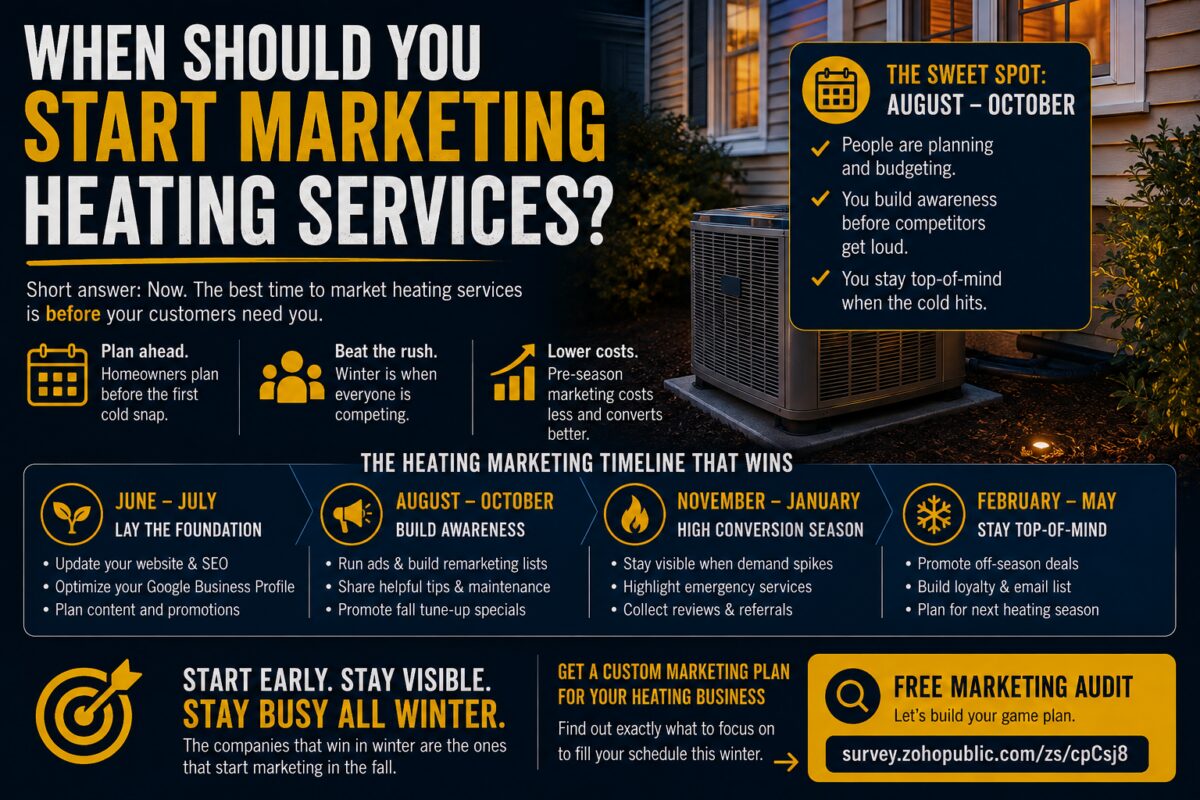
Posts. Consistent publishing tied to seasonal demand: AC content in the spring, maintenance offers in shoulder seasons, heating content going into fall. Google rewards active profiles with visibility, and posts keep the profile fresh without touching the website at all.

Reviews. A request process built into the job completion workflow. Tech finishes the job, mentions the review in person, office sends the direct link within the hour. Reviews shifted from occasional and random to steady and predictable, which is exactly the pattern Google’s systems read as a trusted, active business.

Q&A. We seeded and answered the questions buyers actually ask before hiring an HVAC company: service areas, financing, emergency availability, brands serviced. The Q&A section is public real estate most businesses leave empty, and empty sections get filled by strangers or not at all.

The results

Inbound calls from the profile rose 242%. Website clicks rose 80.8%. Overall profile interactions rose 44.3%.

Ad spend during this period: zero. No new website. No paid campaigns. The same company, the same market, the same services, with the free asset finally doing its job.

How to audit your own profile this week

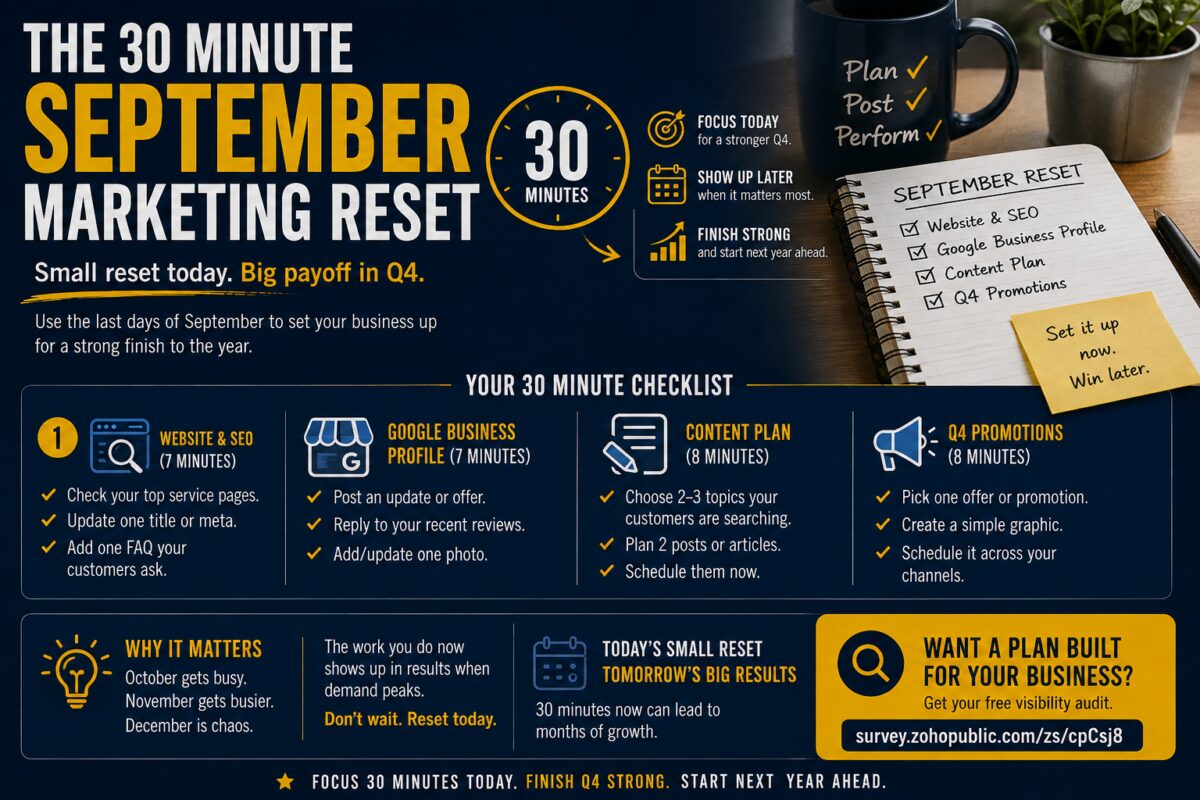
You can run a rough version of our audit in twenty minutes. Pull up your profile as a customer would see it and ask six questions. Is the primary category the service that makes you the most money? Is every service you sell listed with a description? Are your photos real, recent, and being added regularly? When was your last post? When was your last review, and was the one before that within the same month? Is the Q&A section answered by you, or by nobody?

Every “no” on that list is performance being left on the table. Most profiles we audit have four or more.

What this means for your business

Most local businesses are sitting on the same untapped asset. The profile exists, so it feels handled. It is not handled. A complete, active, optimized profile is the difference between being on the map and being in the map pack, and only one of those gets calls.

The other lesson from this case: the fix did not require more budget. It required the existing asset to be taken seriously. Before spending another dollar on ads, make the free channel work. Everything paid performs better on top of it.

[Internal link: GBP page on “optimized profile” / Case studies hub on “results”]

FAQ

How much can GBP optimization increase calls?

Results vary by market and starting condition, but the upside is real. One HVAC client saw inbound calls rise 242% after a full profile rebuild, with website clicks up 80.8%, all without ad spend. Neglected profiles leave that kind of performance on the table.

How long does GBP optimization take to work?

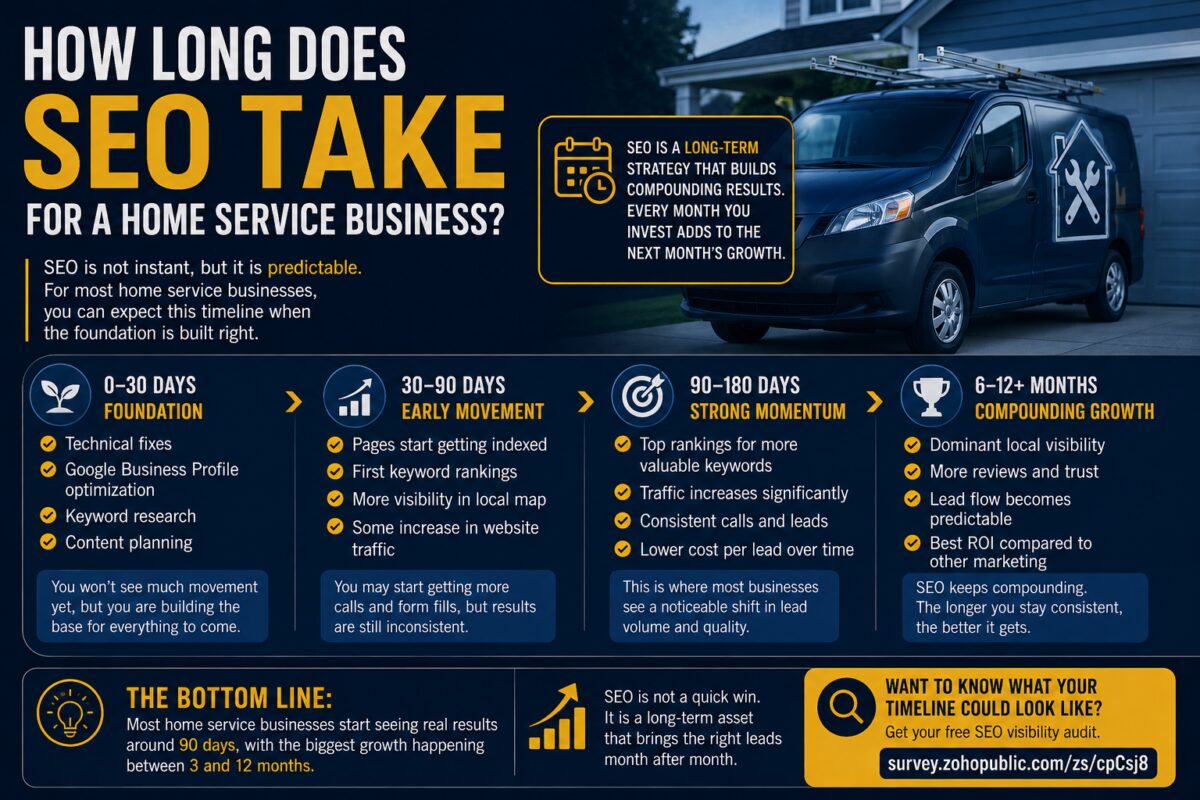
Most businesses see meaningful map pack movement within 60 to 90 days of a full rebuild. Profiles with consistent review velocity and active posting move fastest. GBP results typically arrive faster than organic website SEO because the profile competes in a smaller local field.

Your profile is probably leaving calls on the table. Book a free GBP audit and find out how many.

Why “Managed IT Services” Alone Is the Wrong Keyword to Chase

Everyone targets it, almost nobody wins it

Type “managed IT services” into Google right now and look at who actually ranks. National directories. Review platforms. Franchise MSPs with hundreds of locations and fifteen years of accumulated domain authority. Aggregator sites whose entire business is ranking for exactly this phrase.

That is the competition. Not the MSP across town. Companies with content budgets larger than most MSP marketing budgets, playing a game they have already won. Chasing that phrase as your primary target is how MSPs spend a year and real money on SEO and have nothing to show for it except a report that says “impressions are up.”

This is not an argument against SEO. It is an argument against bad targeting. The search demand in this industry is real and winnable. It just does not live where everyone is looking.

The intent problem nobody talks about

Set aside the competition for a moment and look at the search itself. Even if you ranked number one for “managed IT services” tomorrow, who is typing it?

A student researching the industry. A job seeker. A vendor building a prospect list. A journalist. And yes, somewhere in there, an actual buyer, probably at the very beginning of a journey that will take months. The phrase is vague because the intent behind it is vague.

Now compare: “CMMC compliant MSP.” “Co-managed IT for manufacturing.” “Microsoft 365 migration support.” The person typing those has a specific problem, usually a timeline, and often a budget. The search volume is a fraction of the generic term. The buyer percentage is many times higher. In lead generation, a hundred visits from buyers beats ten thousand visits from browsers, every single time. Traffic is not the goal. Revenue is.

Where the winnable traffic lives

The pattern is simple: take the service and add a qualifier that only a real buyer would use. Four qualifiers do most of the work.

Service plus vertical. “IT support for law firms.” “Managed IT for medical practices.” “IT services for manufacturers.” Buyers search their own industry because they want a provider who already understands their software, their compliance exposure, and their workflow. A page written for their industry converts at a rate a generic page never will, because the buyer sees themselves in it.

Service plus compliance. “NIST 800-171 IT provider.” “HIPAA IT support.” “CMMC assessment preparation.” Compliance qualifiers are the strongest in the industry because compliance creates deadlines and deadlines create budgets. These searches also filter for company quality automatically. Nobody researches CMMC for fun.

Service plus location. “Managed IT services Greenville SC.” Local modifiers cut the competitive field from national to regional instantly. The directories still show up, but a well-built local MSP site with a strong Google Business Profile can absolutely compete here, and the map pack adds a second placement the national players cannot fully control.

Service plus problem. “Microsoft 365 migration support.” “24/7 network monitoring.” “Server virtualization services.” Specific services attract buyers who already know what they need, which means shorter sales cycles and fewer education calls.

How to audit your current targeting

Before writing anything new, find out what you are actually targeting today. Open your site and read your page titles. If they say some version of “Managed IT Services | Your Company Name” on every page, you are targeting the generic term and your brand, nothing else.

Then open Search Console and look at the queries you appear for. Two things usually jump out. First, you are getting impressions for modified searches you never intentionally targeted, which proves the demand exists in your market. Second, you rank on page two or three for some of them, which means a focused content improvement can move you into clicking range far faster than any new page could rank from scratch.

List every service you actually sell, every vertical you actually serve, and every compliance framework you actually support. Cross-reference against your existing pages. The gaps in that grid are your content plan, already prioritized by what you can genuinely deliver.

The structure that wins modified keywords

Each modified keyword deserves its own page, built for that search alone. A vertical page speaks the industry’s language and names its specific risks. A compliance page demonstrates real command of the framework, with honest answers about scope and timelines. A problem page walks through the fix and is honest about when it needs a professional.

Every page ends the same way: one clear next step. Not five options. One. In our case, and in what we build for clients, that step is a booked audit call.

The strategy in one paragraph

Keep “managed IT services” in your page titles and headers. It belongs there for relevance. But build your content plan and your expectations around the modified searches you can actually win in six months, not the generic one you might never win. Rankings that bring buyers beat rankings that bring bragging rights. That is the entire strategy, and almost nobody in this industry follows it.

[Internal link: MSP SEO page on “content plan” / Cybersecurity page on “compliance”]

FAQ

Should MSPs target the keyword “managed IT services”?

Include it in your page titles and headers, but do not build your strategy around it. National directories and franchise MSPs dominate that result. Modified keywords combining your service with a vertical, compliance framework, or location deliver higher intent traffic you can actually win.

What are the best low-competition keywords for MSPs?

Combine services with qualifiers: industry verticals like “IT support for law firms,” compliance frameworks like “CMMC compliant MSP,” locations like “managed IT Greenville SC,” and specific services like “Microsoft 365 migration support.” These carry stronger buying intent and far less competition than generic terms.

Want a keyword map built around searches you can win? Book a free audit.

Winning the 2am Search: Emergency Plumber Visibility

Emergency searches are a different game

A homeowner with water pouring through the ceiling is not reading blog posts. They are not comparing five plumbers, checking three websites, or asking for quotes. They pull out a phone, type “emergency plumber near me,” and call the first result that looks legitimate. The entire buying decision happens in under 60 seconds, usually while standing in water.

That compresses everything you know about marketing into a single moment. There is no nurture sequence, no follow-up email, no second chance. Either you are visible and trustworthy at the moment of crisis, or the job goes to whoever is. This post covers what actually decides that moment, and how to build for it before the phone rings.

The map pack decides the winner

For emergency searches, the map pack is almost the entire battlefield. The searcher is on a phone. The map with three businesses is the first useful thing on the screen, and it shows exactly what a panicked homeowner needs: who is nearby, who is open, who has good reviews, and a call button. Most emergency callers never scroll past it.

That means your organic ranking on page one matters less here than anywhere else, and your Google Business Profile matters more. The profile is the product. Everything that follows is about making that profile win the 60-second evaluation.

The five signals that win the emergency search

Accurate 24/7 hours. If your profile says you close at 5pm, Google may filter you out of a 2am search entirely, and even if it shows you, the searcher sees “Closed” in red and moves on. If you offer emergency service, your hours need to say so. If you offer it seasonally or on-call, use the more hours feature to reflect reality. This is the single most common miss we see, and it is a five-minute fix.

Emergency service listed as a service. Add “emergency plumbing repair” as a distinct service on your profile with a real description: what qualifies as an emergency, how fast you respond, what areas you cover overnight. Google matches services to searches. No service listed, no match. The description also pre-answers the questions a panicked caller would otherwise ask, which shortens the call and builds confidence before it starts.

Reviews that mention emergencies. When customers write “came out at midnight” or “fixed our burst pipe on a Sunday,” those words become ranking signals for emergency searches and conversion signals for emergency readers. A homeowner in crisis scans reviews for evidence that you handle crises. Ask your emergency customers specifically to mention the situation: the time, the problem, the response. Most happy customers will if you ask.

Click to call that works everywhere. Nobody fills out a form during a flood. Your phone number needs to be tappable on the profile, tappable on your site, and answered when it rings. Test the full path on your own phone this week: search, tap, call. If any step fails, every dollar you spend on visibility is wasted at the finish line.

A fast mobile page. If the searcher does click through to your site, that page has about three seconds to load before they hit back and call the next plumber. Emergency landing pages should be light, immediate, and built around one action: the phone number, large and tappable, above everything else.

The emergency page your website needs

Beyond the profile, build one dedicated emergency plumbing page on your site. Not a paragraph on the services page. A page. It should target the emergency keyword directly, load fast, lead with the phone number, and answer the three questions every emergency caller has: do you come out now, what areas do you cover, and what happens when I call. Keep it short. A person in crisis needs confidence, not an essay.

This page also becomes the landing destination if you ever run Local Services Ads or paid search for emergency terms, which brings up the next point.

Where paid placement fits

Emergency searches are one of the few places where Local Services Ads genuinely shine. The pay-per-lead model fits crisis calls, the Google Guaranteed badge answers the trust question instantly, and the top-of-page placement puts you above the map pack itself. If your review base can compete and someone actually answers your phone at night, LSAs for emergency terms are worth testing.

But the order of operations still holds. The profile comes first, because it is free, it feeds the map pack, and it makes every paid click convert better. Paying for emergency visibility while your profile shows wrong hours is paying to send crisis calls to a dead end.

What one emergency call is actually worth

Run the real math before deciding this is not worth the effort. The emergency ticket itself carries premium pricing. The customer who got rescued at 2am becomes the most loyal customer you will ever have: they call you for the water heater next year, the repipe after that, and they tell the neighborhood group who saved them. One won emergency search can be worth five figures in lifetime revenue.

Winning that search is not about one ticket. It is about owning that household, and every household like it, at the exact moment they are deciding who their plumber is.

[Internal link: GBP page on “profile” / Plumber page on “emergency plumbing”]

FAQ

How do I show up for emergency plumber searches?

Set accurate 24/7 hours on your Google Business Profile, list emergency plumbing as a distinct service, build reviews that mention after-hours work, and make your phone number tappable everywhere. Google matches emergency searches to profiles that clearly signal emergency availability.

Do Google reviews affect emergency search rankings?

Yes. Review content is a ranking signal. Reviews that mention emergency service, after-hours response, or specific situations like burst pipes help Google connect your profile to emergency searches. Ask emergency customers to describe the situation when they leave their review.

Not showing up when the pipes burst? Book a free audit and we will tell you exactly why.

What MSP Buyers Actually Search Before They Ever Call You

The call is the last step, not the first

By the time an MSP buyer fills out your contact form, they have been searching for months. They compared vendors. They read reviews. They Googled problems at 11pm after something broke. They asked their peer group, then went back to Google to verify what their peers told them.

Research on B2B buying consistently shows the same pattern: the majority of the decision happens before a buyer ever talks to a salesperson. The vendor list gets built in private, from search results, review profiles, and content. If your site only shows up when someone types your company name, you are not in the running for any deal where the buyer did not already know you. Which is most deals.

This post breaks down the four search types MSP buyers actually run, in the order they typically run them, and what your site needs to show up for each one.

Stage one: problem searches

These come first, often long before the buyer admits they need outside help. “Why does our server keep going down.” “Email not syncing across devices.” “Ransomware recovery steps.” “Network slow after adding new users.”

The person searching is usually not the owner. It is the office manager who inherited IT by accident, or the one technical employee drowning in tickets. They are not shopping for an MSP. They are trying to fix something. But every failed fix moves them one step closer to the conclusion that this needs a professional, and the content that helped them along the way earns the first phone call.

Problem content works because it builds trust before the sales conversation exists. A blog post that genuinely explains why their backups keep failing does two things: it answers today’s question, and it demonstrates that you understand their environment better than the last provider did. When the internal fix fails, they remember who taught them something.

The mistake MSPs make with problem content is writing it for other IT professionals. The searcher is a frustrated business person. Write for them. Plain language, clear steps, honest about when the problem needs professional help. Content that talks down or drowns in jargon gets closed in ten seconds.

Stage two: compliance searches

“CMMC level 2 requirements.” “NIST 800-171 checklist.” “HIPAA compliant IT support.” “SOC 2 readiness assessment.”

Compliance searches are the highest-value searches in the MSP world, and the reason is structural. Behind every compliance search is a deadline, and behind every deadline is a budget that has already been approved or is about to be. A defense contractor facing a CMMC assessment is not browsing. Their contract eligibility depends on passing. That urgency changes everything about how fast the deal moves.

These searches also filter for quality. A company researching NIST 800-171 requirements is by definition a company with government contracts or aspirations toward them. That is a real business with real revenue, not a five-person shop looking for the cheapest possible IT support.

Compliance content should be specific and honest. Real requirement breakdowns, real timelines, real answers about who needs what. Generic “compliance is important” content converts nobody. The buyer knows compliance is important. That is why they are searching. What they need is someone who clearly understands the framework better than they do.

Stage three: comparison searches

“MSP vs internal IT cost.” “Co-managed IT vs fully managed.” “Best MSP for manufacturing.” “Questions to ask an IT provider.”

By this stage, the buyer has accepted they need help and is narrowing options. Comparison content is where you get to frame the evaluation. The MSP that publishes “10 questions to ask before hiring an IT provider” gets to choose the questions, and unsurprisingly, the right answers tend to describe that MSP.

This is not manipulation when done honestly. If you genuinely believe response time guarantees matter more than headcount, say so and explain why. The buyer gets a real education and you get evaluated on your strengths. Both sides win against the competitor whose site says nothing.

Cost comparison content deserves special mention because MSPs avoid it and buyers crave it. You do not need to publish your pricing to publish useful cost content. “What managed IT services cost and what drives the price” answers the search honestly, sets realistic expectations, and filters out buyers who were never going to afford you. Every hour your sales team spends with an unqualified prospect is an hour this content could have saved.

Stage four: local searches

“Managed IT services Greenville SC.” “IT support near me.” “Cybersecurity company near me.”

Yes, B2B buyers run near me searches. They want a partner who can put a tech in the building when something physical breaks, and they trust companies with a reputation in their own business community. Local search is also where the map pack matters: when an operations manager gets told to find three vendors to evaluate, the three businesses in the map pack have a real chance of becoming that list.

Showing up locally requires the local foundation: a complete Google Business Profile with IT categories and services, reviews from business clients, a website that plainly names your city and service area, and consistent citations. Most MSPs have none of this because they assumed local SEO was for plumbers. That assumption is your opening.

How to find these searches in your own business

You do not need expensive tools to start. Three sources sit in front of you already.

Your sales calls. Every question a prospect asks on a discovery call is a search someone else is typing into Google. Keep a running list for one month. That list is a content calendar.

Your ticket system. The problems your clients submit are the problems prospects are Googling. The ten most common ticket types are ten problem posts waiting to be written.

Search Console. If your site has any history, the Performance report shows queries you already appear for, including ones you rank on page two or three for. Those are the fastest wins available, because Google already associates you with the topic. Improving an existing page from position 15 to position 5 is far easier than ranking a new one.

Putting it together

Map your service pages to compliance and comparison intent, because those searches carry budgets. Map your blog to problem intent, because those searches build the relationship early. Build the local foundation, because the map pack is a lead source your competitors are ignoring. Then write every piece for the question a real buyer actually typed, not the topic that was easiest to produce.

The MSPs winning on search are not producing more content than everyone else. They are producing content that matches the journey. That is the entire difference.

[Internal link: MSP SEO page on “service pages” / Content Creation page on “content calendar”]

FAQ

What keywords should an MSP target?

Target four categories: problem searches like “server keeps crashing,” compliance searches like “CMMC level 2 requirements,” comparison searches like “MSP vs internal IT,” and local searches like “managed IT services” plus your city. Generic terms alone put you against national competitors you will not outrank.

How long does MSP SEO take to generate leads?

Most MSPs see qualified lead movement within 90 to 180 days when targeting compliance and problem-based keywords. Generic keyword strategies take far longer. The timeline depends on your starting authority, your content quality, and how specific your keyword targeting is to actual buyer intent.

 Want to know which searches your buyers run that you never show up for? Book a free audit. We will show you the exact gaps.

Google Is Folding Local Services Ads Into Performance Max: What Home Service Businesses Should Do Before August

What is actually changing with Local Services Ads?

Google is merging the standalone LSA platform into Google Ads on a phased schedule: select U.S. home and storefront service categories beginning August 2026, service-area businesses later in 2026, and everyone else through 2027. Google will notify you before your account moves.

  • Bidding: manual bidding goes away. Everything moves to Target CPA. You tell Google what a lead is worth and its automation works to that number.
  • Budgets: weekly budgets become daily budgets (your weekly amount divided by 7), with monthly spend capped at about 30.4 times your daily average.
  • Leads: the old LSA inbox is replaced by a Lead Manager inside Google Ads. Your leads transfer; the interface changes.
  • Your business info: name, address, and hours now sync one-way from your Google Business Profile into your ads. A significant change to your profile can trigger a 24–48 hour verification review.
  • Your history: past LSA performance reports do NOT move over. If you don’t download them before migration, they’re gone.

What stays the same?

The parts that made LSAs worth running survive the move. You still pay per valid lead (calls, messages, bookings), not per click. Ads still show only on Google Search and Maps, not across YouTube or Gmail, despite the Performance Max name. And targeting stays category-based rather than keyword-based, driven by your business profile. If LSAs bring you jobs today, they should keep bringing you jobs, provided the transition doesn’t trip you.

The three things to do before your account migrates

1. Download your LSA history now

This is the one with a hard deadline. Your years of lead volume, cost-per-lead, and seasonal patterns are the benchmarks that tell you whether the new system is performing. Google has confirmed those reports won’t carry into Google Ads. Export everything, every date range you can, and store it somewhere safe. Fifteen minutes now protects years of data.

2. Get your Google Business Profile immaculate

Your GBP was already your most important local asset; now it literally feeds your paid ads. Wrong hours, an outdated address, or a sloppy category doesn’t just cost you map-pack visibility anymore; it can pause your lead flow for a day or two of verification review. Check name, address, phone, hours, categories, services, and photos. Then keep it current, because every edit ripples into your ad campaigns.

3. Know your numbers before automation takes the wheel

Target CPA bidding is only as smart as the target you give it. Before the switch, work out what a lead is genuinely worth in each service line. An emergency call and a full replacement quote are not the same lead. Under the new structure, keeping them in one campaign with one target can quietly overpay for one and starve the other. This is where a strategy conversation matters more than button-pushing.

The bigger picture: Google keeps tying everything to your business profile

Look at the direction of travel. Your Google Business Profile now powers your map ranking, your reviews, your voice-search answers (“who’s open near me right now”), what AI assistants say about your company, and from August, your paid lead flow too. One asset, five jobs. That’s also why we treat GBP work, AI visibility, and paid campaigns as one system rather than three services. The businesses that keep winning through changes like this are the ones whose foundations were already clean.

Common questions

When does the LSA change happen?

Phased rollout: select U.S. home and storefront service businesses start in August 2026, service-area businesses later in 2026, and remaining categories and countries through 2027. Google says advertisers get advance notice before their account transitions, so watch your email.

Will I still only pay for real leads?

Yes. The pay-per-lead model survives the merger: you pay for valid calls, messages, and bookings, not clicks. Ads also stay on Google Search and Maps only. The pricing model isn’t changing; the management system around it is.

Do I lose my old LSA data?

Your leads transfer, but your historical performance reports do not. Anything you haven’t downloaded before migration is gone permanently. Export your lead and cost history now and keep it as your benchmark for judging the new campaigns.

What should I do first?

Download your LSA reports today, then audit your Google Business Profile; those two cover the deadline-sensitive risks. Then decide your target cost-per-lead for each service line before automated bidding takes over. If you want a second set of eyes, that’s what our free audit is for.

Want to know if your business is ready?

We’re offering a free AI Visibility Audit for home service companies: we check what Google, ChatGPT, and voice assistants currently say about your business, review your GBP against the new requirements, and send you a short video with the three fastest fixes, delivered within 48 hours, no strings. Request yours by filling out this form.