Why On-Page SEO is Important

It is important to understand that on-page SEO is the set of process of providing search engines with information about your website or particular page. This helps them figure out whether what you have to offer is helpful to the searcher. Let’s uncover why on page SEO is important for your website’s SEO campaign

Search engine result pages (SERPs) are becoming more complex and highly efficient in terms of user requirement and as search engines gain sophistication, and a greater emphasis is being placed on relevancy and semantics.

As a result of Google’s suite of complex algorithms, it is now much more effective at performing the following tasks: 

The search engine analyzes what users type when they type a query.

User-centric search results (informational, shopping, navigational) aligned with the user’s intent. 

It is possible to adapt to this change by making sure your website and its content are optimized according to the latest best practices, both for contents that are visible to users (non-visible tags) and for those search engines can access (HTML tags, structured data). 

When optimizing for on-site elements, you have more control than off-page SEO (which relies on external signals such as backlinks). 

Important On-page SEO Parameters

We have piled up the crucial on-page SEO parameters to make sure that your on-page SEO is going to be successful.

Keyword Research

The foundation of on-page SEO begins with keyword research. In search engine optimization (SEO), keyword research refers to finding an individual’s search term and analyzing it to use it to reach a target audience, often for an SEO campaign. It is possible to identify which queries to target, their popularity, their ranking difficulty, and more through keyword research.

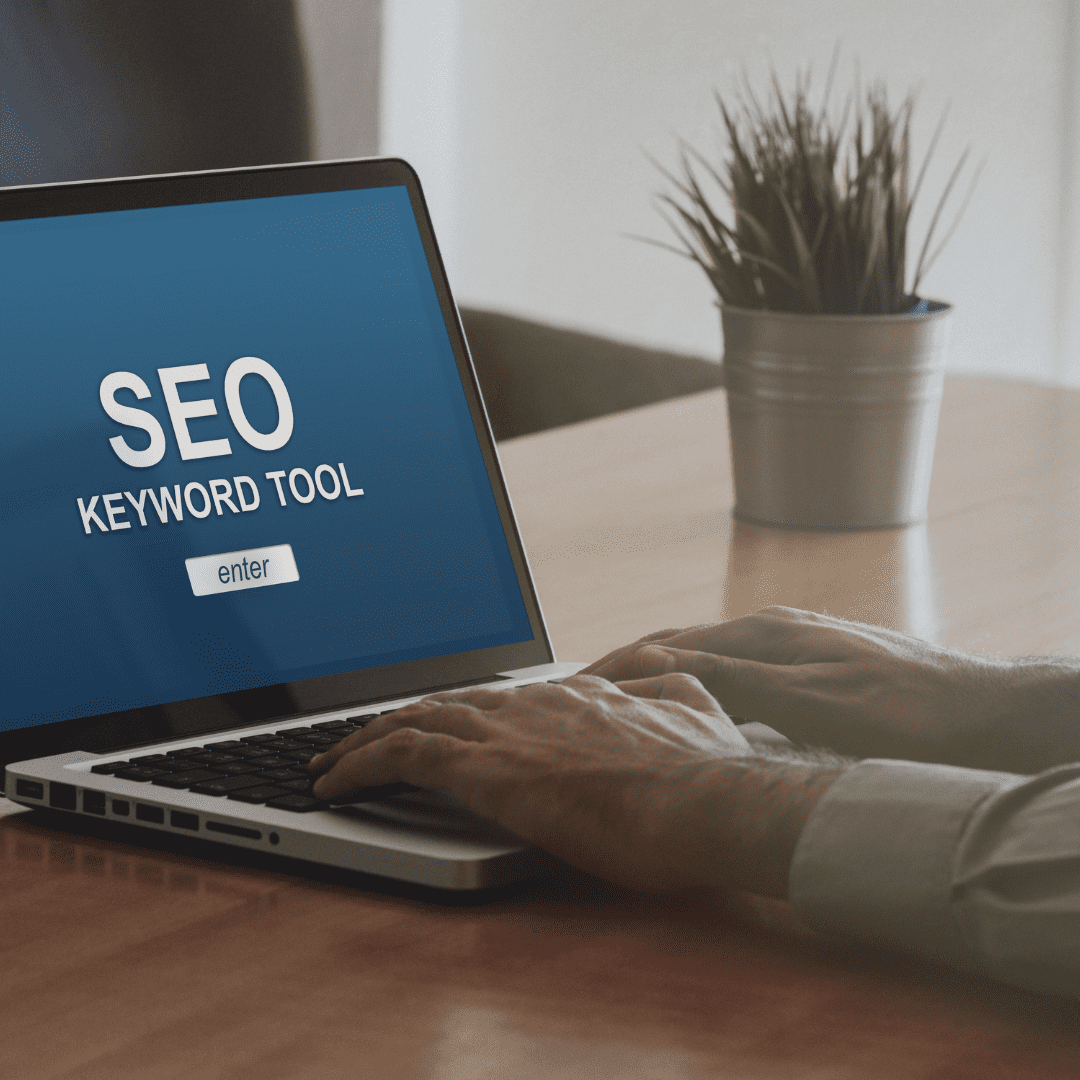
You likely have a few keywords in mind that you would like to rank for. These will be things like your products, services, or other topics your website addresses, and they are great seed keywords for your research, so start there! You can enter those keywords into a keyword research tool to discover average monthly search volume and similar keywords. We’ll get into search volume in greater depth in the next section, but it can help determine which variations of your keywords are most popular among searchers during the discovery phase.

You need to select the right intent keyword that might not have massive search; however, they are the money keywords that will bring you converting traffic.

High-Quality Content

After seeing why on-page SEO is still relevant, it’s time to start optimizing your content. Your content must be unique, valuable and justify the search intent of your target keyword to rank well on the SERPs.

Content plays an essential role in how a page will be ranked in search results listing. Essentially, the reason why search engines pay so much attention to the content is the fact that it is what the user is looking for. As a result, creating good content is essential. How can you create good content?

As far as search engine optimization is concerned, all good content has two characteristics. A good piece of content must satisfy a need, and it must be linkable. 

It would help if you made sure that the content on your website was helpful to the visitors. The search engine needs to be able to find what they are searching for if they enter a search term that is too specific for your website to be found. The design of a document that is easy to read and provides value to the user is crucial, and it is also important that the design be well-crafted. To evaluate the usefulness of your content, Google offers a wide range of metrics that can be utilized.

As a rule of thumb, you should ensure that the copy on every page of your web site is unique to that page, not copied from any other page on the site, and in a way that addresses the search queries of your visitors directly.

If the keyword appears near the beginning of the title, then it is wise to place it there, but just if it sounds natural and has context 

Title Tag

Keywords should describe your product or page in your title tag. There should also be an appropriate meta description on the page to help visitors find the right page quickly.

When it comes to on-page optimization, title tags are probably the most important thing to optimize. This is logical as well. It allows you to make it very clear to everyone what the page is about. The reason why search engines would assume your page is about your target keyword is that your target keyword is not included in the page title.

You should make sure that the title tag both displays the right keywords and is user friendly. Your goal should be to make sure you include your target keywords in your title, but you must also make sure that your title is compelling and will encourage users to click on your result.

Meta Description

Meta descriptions have been a point of debate topic in the SEO community. Some believe it is a ranking factor, and some do not. Well, the meta description is used for generating more CTR.

The meta description is the area that lets you show the user what your page is about. Again, this is an opportunity to make your compelling result while also including your main keywords. Make sure that when users see your result, they will want to click on it based on your meta description. 

Your website should contain high-quality content. If it does not, then there will be no point in trying to optimize it. You need to write unique, well-researched content that provides value to your audience. It needs to be original, informative, and engaging.

H1 Tags

The H1 tag is used for highlighting key points on a web page. An attention-grabbing intro is often used on a web page to introduce a new section, summarize a whole section, or give a quick overview. It would be best to keep a few things in mind here; however, the most important is that these tags should only be used sparingly.

It has been discovered that the most important words on a page are those appearing in the headings, which is why search engines now credit those headings with a bit more weight than other sections of the content of a page. There are a few things that should be kept in mind if you intend to include your target keywords into the headings of each web page. When using your keywords, make sure they reflect your page’s great content.

In addition to your page title, you should use the H1 and H2 tags to indicate your content hierarchy to help spiders locate your page. This is an essential step in ensuring that the algorithm can understand how you have arranged the content in your text.

URL Structure

You should include the keywords you want to rank for in your URLs when creating pages and blog posts around those keywords. Try to keep your URLs as short as possible, but make sure your keyword is included in the URL if at all possible. 

Search engines and users alike can understand the content of your page better when your primary keyword is included in the URL. 

Make sure that the keyword appears as far to the left in the URL as possible. 

The use of hyphens makes URLs easier to read. Using the URL www.yourcompany.com/relocation-services, for example, is a good address for a page describing relocation services.

Short and sweet: To maximize the visibility of your content, your URL structure should be short and easy to understand for both search engines and users. Google understands the type of content on your website much better the easier it is to understand. Additionally, Google is known for showing URLs in its search results.

This can harm your users since a URL full of random letters and numbers is difficult to understand. You will be more likely to get a click on your search result if they are more clearly aware of the purpose of your page. 

Image Optimization or Image Alt Text

Making your web pages more appealing can be done by adding images to them. There is no doubt that images are not all created equal – some of them can slow down your website. 

In addition to optimizing text for SEO, images must also be optimized. It would help if you started by giving them descriptive file names separated by hyphens and descriptive descriptions. Secondly, if the file size has been optimized to ensure quick loading of the graphics, it should maintain the quality of the images.

It is helpful to understand that if your site has a lot of images that are consistently larger than 100kb, then your page load time will be negatively impacted, which can damage your ability to rank well in Google.

It is possible to optimize images with tools such as the TinyPNG tool or Imagify plugin (in the case of WordPress), which makes this process very easy. 

Last but not least, it is important to include text in the image alt tags, incorporating the appropriate keywords from time to time. Search engines find alt text helpful in understanding what the image is about.

Focus On E-A-T

Google raters use a framework that they call E-A-T, which stands for Expertise, Authoritativeness, and Trustworthiness. Content creators, individual websites, and websites in general, are evaluated. 

Google has always prioritized high-quality content. Google aims to ensure that websites producing high-quality content are rewarded with good rankings and that low-quality content producing sites are punished with lower rankings.

According to Google’s search results, there is a strong correlation between content that appears in those results and what is considered high-quality content by the company.

In other words, it is very important that one of the elements of your SEO strategy is E-A-T.

 On-page SEO Is Not Technical SEO!

On-page SEO and technical SEO are often confused by some SEOs. However, they are two different things. We believe that technical SEO is concerned with the website speed, duplicate content, page speed, schema, and indexing, and addressing things like page speed and site speed. Hence, technical SEO  optimization focuses on your entire website’s crawling, indexing and performance, while on-page optimization focuses specifically on the URLs that make up your website. 

Besides on-page SEO, there is also off-page SEO, which includes everything outside your websites, such as link building and mentions of your brand on other websites. 

As a result, if you want search engines to reward you by listing your website on the first page, you must pay attention to your on-page SEO strategy. There have also been a lot of changes over the last two decades. Even though Google still considers keywords in your content, keyword stuffing has no longer been successful since it ruins the user experience. 

The on-page SEO factors relevant to the user will become more important as the Google search algorithm becomes more sophisticated. When done correctly, on-site SEO can help search engines understand your content and put the most relevant URLs at the top of the list for specific queries and searches. Furthermore, users are likely to appreciate the clarity and organization that on-page optimization delivers. 

To Conclude

By knowing the parameters mentioned above, you now know why on-page SEO is an important aspect to consider. If you would like to increase your chances of becoming visible in search engine results then it is vital to improve your website’s on-page SEO. On a regular basis, you should optimize your website based on on-site factors to improve your ranking, traffic, and conversions. Our on-page SEO services focus on all the parameters so that your website is perfectly ready for your target user and search engines like Google.

Why SEO is Important and Why Businesses Need it

Why SEO is Important and Why Businesses Need it!

If you’re a business owner, why wouldn’t you want to make your company visible on search engines? SEO is an important aspect of any type of marketing strategy because it connects with consumers and helps businesses stay afloat in the online sphere. There are so many ways that this can manifest into actionable steps: keyword research, blogging services, link-building campaigns – even further optimization tactics. Let’s explore how these different aspects act as powerful tools for boosting visibility!

Common Issues From a Website That Lacks SEO

Stagnant Web Traffic

Organic search greatly impacts a business’s website performance. If a website doesn’t have SEO, it won’t rank high on search engines. No one will be able to find you, so your web traffic will flatline.

Low Conversions and Reach

A website without SEO results in low conversions because you aren’t targeting the correct people. SEO helps you market to your target audience. When Google doesn’t know who your target audience is (since you haven’t defined it), random people who aren’t your ideal customers will end up on your site. 

People who search for similar services or products you offer will not find you. That results in missed opportunities by not maximizing common ways consumers find businesses online.

5 Types of SEO

There are several types of SEO you need for a well-rounded organic search strategy but we are going to focus on the top 5.

  1. On-page SEO is the process of optimizing each page on a website. You can optimize pages by providing valuable content and through the HTML source code. 
  2. Technical SEO ensures that your website meets the technical requirements of search engines. You can audit your technical SEO by looking at crawling, indexing, website architecture, and rendering.
  3. Off-page SEO is actions not on your website that impact your search engine ranking. This includes linking to your website on other platforms and being active on other websites, such as social media. The goal is to improve the perception of your website among users.
  4. Local SEO has a number of steps that are important for local SEO that you won’t need to think about in a more traditional SEO campaign. For example, making sure that you’ve claimed your Google My Business page, which ensures that your name, address, phone number, opening hours, reviews, and other useful information is prominently displayed in search results and on Google Maps. That listing itself needs to be optimized with good photos, descriptive information, and real reviews from customers.
  5. YouTube SEO is a niche type of optimization, but it can make a big difference in how much traffic you’re getting. Many people don’t realize that YouTube is one of the world’s most popular search engines, and that ranking for a popular search there is absolute gold. And if you can also rank one of your videos for a standard Google search, you can get an even bigger boost.

By breaking down your strategy and thinking about SEO as these three categories, it will be much easier to strategize and execute your optimization plans.

Benefits of an SEO Strategy

Reduces Bounce Rates

Bounce rate is when someone lands on your website and almost immediately leaves. When your website is optimized, the right people will find it. That means you have the information that they are searching for, and they won’t bounce. The goal isn’t to drive as much traffic as you can. It’s to drive the right traffic to your website. That will increase your conversion rate.

Better User Experience

When the right people land on your website, they will find exactly what they need. As mentioned, your website performance will suffer if people can’t find what they need. Use on-page SEO strategies to make finding information quick and easy.

Increased Conversions

Local search has become a huge part of businesses’ success. Local SEO optimizes your website to target a specific location. Businesses should have a Google My Business page to optimize for local search. People are searching for your product or service, so they are ready to buy. They are just trying to figure out who to buy from. Don’t take for granted what your free online business listing can do for your sales and relationship building. Explore my Google My Business services.

Optimizing a website has never been easy thanks to the wide variety of SEO options available. For those just getting started, on-page optimization can be enough for now but if you want your site’s ranking boosted in search results and make it near impossible for people not to find what they’re looking for then you’ll need to use at least three types of SEO: On-page Optimization, social media optimization (SMO), and link building.

Now that you know the top 5 SEO strategies, and the benefits of an SEO strategy, you can start putting these tips into practice. Get started today. It’s never too early to start implementing SEO strategies. If you want assistance setting up your SEO strategy, apply to work with us. We would be happy to help optimize your site to grow your business.

Are Google Ads Right For My Business

Are you considering starting a Google ad campaign for your business? Ads can be profitable if done correctly. You can grow your business with paid Google ads and get in front of consumers who are searching for businesses like you. Let’s explore more about Google ads and decide if they are right for your business.

Google Ads vs. Facebook Ads

The biggest question I get is Google ads or Facebook ads? Facebook ad’s sole purpose is to generate traffic, and you will pay for every impression. Facebook is more geared towards finding your ideal avatar and putting your ad in front of them with the chance that they will take action and you will pay for the learning.

You have to pay a specific price based on the amount of time you want to keep the ad running and how many people it will reach. That doesn’t necessarily mean people who will engage or convert. It includes the people that scroll past your ad while they are passing time.

Google ads put you in front of consumers who are specifically looking for you and ready to take action. You pay for results. You can create more pay-per-click (PPC) ads for less and test different PPC campaigns, such as search ads, display ads, and video ads since you only get charged when people actually click the ad.

You also get to add negative keywords to Google PPC ads to further ensure you are not throwing money away. Learn more about Google ads vs. Facebook ads in this blog.

Benefits of Google Ads

With Google ads, your ads are only shown to people searching for your service or product; it’s straightforward and there’s no guessing. You go into the marketing strategy with a custom audience based on consumers who are searching for your product or service and are ready to buy. They just need to know who they are going to buy from.

You can rely on a search engine that has more than 40,000 search queries every second. People are going on Google to search for what they need, and they can conveniently come across your ad on the front page of Google, which will lead serious buyers to your website or landing pages and then convert.

Test, Test, Test!

Google ads have proven to benefit businesses of all sizes and industries. However, some strategies that are successful for some companies won’t work for others. The only way to determine if Google ads will be successful for you is to test different strategies.

The cost can add up quickly, so start small to see if it works for you. Contact us today to learn how we can help with testing strategies.

Powerful Analytics

You can easily track results with Google ad campaigns. With pay-per-click (PPC) campaigns, you can track click-through and conversion rates and how much you’re spending on ads. PPC campaigns are attractive to business owners because they accurately track ROI.

You won’t be left guessing. PPC campaign analytics tell you exactly how much you’re spending per converted lead. 

For example, if your ad costs $1,000 and you got 500 clicks and 100 conversions, each click cost you $2, and each conversion cost you $10. This is just an example, but you can play with the numbers to decide how much you need to spend on a campaign to get a high rate of return on your investment.

Are Google ads right for your business? They are a powerful marketing tool and can lead to great results. It’s up to you if you want to spend the time and money to test strategies until one works. However, we can help!

To make Google ads successful, you must have a strategy in place. At 1×1 Impression, we help business owners with strategy, implementation, and management of ad campaigns. Contact us today to learn how we can work together.

About 1×1 Impression

1×1 offers a full range of marketing strategies and services, including SEO, Lead Generation, Digital Marketing packages, Branding packages, Logo and Materials, Custom-built cloud-based business applications, and Customized CRM systems. It is important to have a system in place before approaching any project. Our workflows have been time-tested and proven to work more efficiently and allow us to have packages to fit everyone’s budget. Contact us today to learn how we can work together.

Pay-Per-Click Management can include:

  • Ad Creation
  • Ad Optimization
  • Account Build Out
  • A/B Testing
  • Keyword Research & Targeting
  • Geo-Targeting
  • Landing Page Optimization
  • Account Data Analysis
  • Website Usability (updates)
  • Retargeting
  • Ad Extensions

Google Ads vs Facebook Ads? Which Is Better For Your Business?

If you are thinking of running paid ads online, you may be considering whether Google Ads or Facebook Ads is the best option for you.

Add a heading 94 1024x719 1

The real question is where is your business right now?
What are the current efforts you are putting into marketing?
What is actually working for you right now?
What is your goal?
What is your marketing budget?

Once you answer these questions you will better be able to decide which path is best for you. I have clients who do amazing with Facebook Ads, but she has built her Facebook Page up with great content, high engagement, and she grew an authentic following. She has super fans who know what she offers and will buy everything that she puts out.

So she is doubling if not tripling her ROI on Facebook.  But this article is not to say one is better than the other, but more for someone who is just starting out and what the differences are when you just jump in before having a following. 

Don’t Throw Money Away 

When you use Facebook ads, you have to pay a specific price based on the amount of time you want to keep the ad running and how many people it will reach.  And when we say reach that does not mean people who will engage or convert. This means the people that scroll past your ad while they are passing time.

With Google ads, you are only charged for people who click on your ads. The people who click on your ads should know exactly what you are offering. With any good marketing campaign and attractive ad copy, you will not waste your cost-per-click budget on tire kickers.

You can create more PPC Ads for less. You can test different PPC campaigns, such as search ads, display ads, and video ads since you only get charged when people actually click the ad.  Bonus: You get to add negative keywords to Google PPC ads as well to further ensure you are not throwing money away.

You can run A/B testing on Facebook too, but you will likely spend more in the learning process on social media in the long run. If you are going to test on Facebook ads, you have to be ok with losing the money you are going to spend with no return. 

Stop Guessing

Ads can be tricky enough. Take guessing out of the equation. With Facebook, it is a bit of a guessing game. It starts with Facebook’s algorithm, and even if you think you have it figured out they will change it again shortly. You need to have a strong avatar created to get as close to your target audience as possible, or you need to have a client list to create a lookalike audience.

You may have to try several ads before you even reach the right audience. For example, you have to choose the best categories that match your audience. You may have even seen this before on Facebook – Someone will receive an ad in their newsfeed and then they will comment complaining how it has nothing to do with them.

Do you really want to waste money when it doesn’t always target the right audience?

With Google Ads, your ads are only shown to people searching for your service or product. Straight-forward and no guessing.  You go into the marketing strategy with a custom audience based on consumers who are searching for your product or service and are ready to buy. They just need to know who they are going to buy from.

Large Audience on Google

Sure, people are scrolling on Facebook constantly, but they are scrolling to connect with their friends and family. They are not on Facebook to buy. While many people purchase from ads, you have to catch their attention to be convinced enough to click your ad, let alone purchase your product or service.

With Google Ads, you can rely on the search engine that has more than 40,000 search queries every second. People are going on Google to search for what they need, and they can conveniently come across your ad on the front page of Google, which will lead serious buyers to your website or landing pages and then convert.

You have to ask yourself, do you want to guess and throw money out the window while you learn? Or do you want to be on Google where people are looking specifically for your product or service? Better yet, you won’t even be charged unless they click your ad. How much better can it get?

If you make six figures or more in your business, then the next step is to consider advertising on both Facebook and Google. You’ll get reach with their huge audience on Facebook, which will ultimately lead to a larger customer base for your company.  I’m using Adwords PPC so that my ads are at the top of search results pages when people look for products like mine; this way they’re much less likely to find me if they’ve got an urgent need (or even just googling about something related). 

Would you like to see what Google Ads can do for your business? There is a free consultation available, so feel free to apply by clicking the link below.

Apply to Work Together

Wouldn’t it be amazing if we could achieve greatness with just one click of the mouse button! Now this may seem too good to be true but have no fear because I’ve found out how and want you in on my secret.

Stay up to date with all of the latest news and techniques in the digital marketing world!

Digital Marketing for 2021

Among the growing community of entrepreneurs and digital marketers, we have an amazing team here at our digital marketing agency 1×1 Impression. 

I have made my career out of digital marketing by helping many other businesses grow enormously online using years-long experience in social media branding and digital marketing.

What is digital marketing?

Digital marketing, specifically, refers to ‘Achieving marketing goals through applying digital technologies and media.’

Digital technologies and media include:

  • Business websites
  • Mobile apps
  • Social media business pages
  • Search Engines
  • Advertising
  • Email and automation
  • Digital Partnerships with other digital companies

You may think why would I need Digital Marketing?

Do you have a digital marketing strategy? If not, you could be keeping a large number of your target customers from reaching your brand, products, and services.

Digital marketing is critical for operating a successful business.

 Here are five reasons why:

  • Exposure to your target audience
  • Measuring for success
  • Competing as a small fish in a big pond
  • Building relationships and reputation
  • Increasing your revenue

Pain Points that Digital Marketing can help with!

  1. We aren’t making enough money.
  2. We are not able to get new customers.
  3. We are not able to keep existing customers.
  4. We are not being found online.
  5. We are throwing money at ads and getting no results.
  6. Our website sucks.
  7. Our landing page isn’t converting.

We offer a wide range of marketing services including but not limited to:

  • Google My Business (GMB)
  • SEO (search engine optimization)
  • Google Adwords (PPC)
  • Google Analytics
  • Bing/Microsoft Advertising
  • Website Design
  • Branding
  • Social Media Marketing

    Or, are you looking for a system that streamlines your business? But, you are finding it frustrating looking for one that includes everything you need? We create custom business applications and CRM’s.

Don’t Pay For YOUR Google My Business Listing

Short/Long story…

I have seen more people in my industry asking about Lead Gorilla. Lead Gorilla is a software that will crawl behind the scenes and pull out business information from Facebook and Google. At first glance, it seems like a smart business tool.

1x1 impression lead gorilla dont pay for your google my business listing 1

I personally don’t like their business model or values Or to be fair, I do not like what the consumers have done with this tool. I am not sure if the software provider has suggested the data be dealt with in this manner or not but this is what is happening.

And here’s why. I got a call today that said ” Wait! don’t hang up, you have not claimed your Google business listing and we have been trying to get in touch with you. “

So the way I am I of course press 1 to speak to someone and hear how they are approaching business owners with no knowledge.

I get on the phone with a telemarketer who immediately is implying that he works with Google and I need to rush to claim my listing (this is what I do, so I know my listing is claimed)

He wanted to charge me a HUGE discount rate of $399 to complete my listing and transfer it back to me. He walked me through the steps of Google sending me my verification postcard (claiming that it will come from their corporate office)which I rebutted “that comes from Google”. He responded, “Yes because we work for the front end for Google.”

I called him out on being a Google Partner or employee and he became very uncomfortable and quickly started to back peddle and drop the price.

Now I charge to optimize, claim, and manage Google My Business accounts but what this company and this service are promoting is to hold business listings, hostage, in a sense. You can request to get them back for free, but if you are not familiar with the process, you may become very frustrated or overwhelmed.

I would be happy to help any of you do this or learn the basics for your clients. Do not pay someone to give you your FREE listing.

Marketing Masterminds

Happy New Year everyone! I started this year off with an amazing opportunity to be interviewed on Cubicle to Ceo podcast with Ellen Yin sharing my expertise with Google my business. This was a special podcast, it was special because it was shared with 17 other great marketing masterminds from a fabulous mastermind group that I am a part of called The Social Clique which is run by Rachel Pedersen.

You are going to want to grab a pen and paper to take notes on all the gold we are sharing in this One podcast!

What Is a Social Media Manager?

Building and running a business is A LOT of work. Especially if you are struggling to grow and or have grown fast. No matter what season you are in there is always more to do and we are not given more hours to get it done. There are so many moving parts that are included when branding or marketing a business, and social media is one of the LARGEST contributors to traffic today.

Are You Visible?

Have Authority

Use your specific knowledge or valuable skill to promote yourself as an authority to help others. Lead a seminar, workshop, or meet up. When leading one of these, you position yourself as an expert and potentially generate new revenue if you charge a fee. You may also toss around the idea of creating a blog or publication.