Emergency searches are a different game
A homeowner with water pouring through the ceiling is not reading blog posts. They are not comparing five plumbers, checking three websites, or asking for quotes. They pull out a phone, type “emergency plumber near me,” and call the first result that looks legitimate. The entire buying decision happens in under 60 seconds, usually while standing in water.
That compresses everything you know about marketing into a single moment. There is no nurture sequence, no follow-up email, no second chance. Either you are visible and trustworthy at the moment of crisis, or the job goes to whoever is. This post covers what actually decides that moment, and how to build for it before the phone rings.
The map pack decides the winner
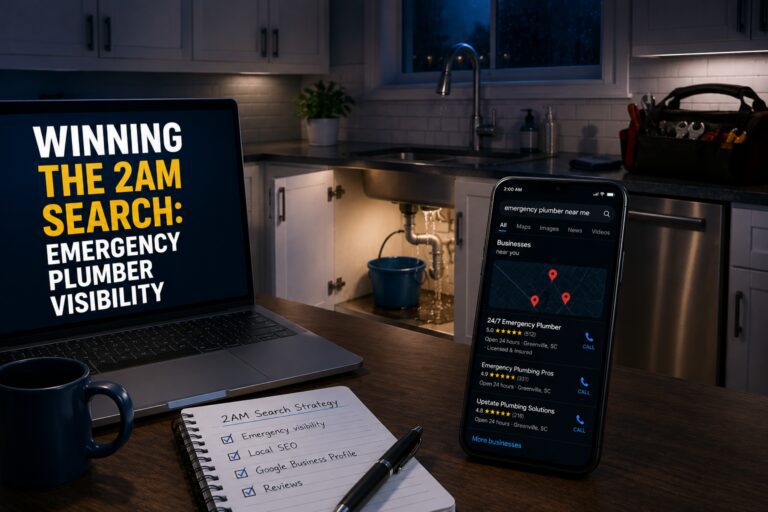
For emergency searches, the map pack is almost the entire battlefield. The searcher is on a phone. The map with three businesses is the first useful thing on the screen, and it shows exactly what a panicked homeowner needs: who is nearby, who is open, who has good reviews, and a call button. Most emergency callers never scroll past it.
That means your organic ranking on page one matters less here than anywhere else, and your Google Business Profile matters more. The profile is the product. Everything that follows is about making that profile win the 60-second evaluation.
The five signals that win the emergency search
Accurate 24/7 hours. If your profile says you close at 5pm, Google may filter you out of a 2am search entirely, and even if it shows you, the searcher sees “Closed” in red and moves on. If you offer emergency service, your hours need to say so. If you offer it seasonally or on-call, use the more hours feature to reflect reality. This is the single most common miss we see, and it is a five-minute fix.
Emergency service listed as a service. Add “emergency plumbing repair” as a distinct service on your profile with a real description: what qualifies as an emergency, how fast you respond, what areas you cover overnight. Google matches services to searches. No service listed, no match. The description also pre-answers the questions a panicked caller would otherwise ask, which shortens the call and builds confidence before it starts.
Reviews that mention emergencies. When customers write “came out at midnight” or “fixed our burst pipe on a Sunday,” those words become ranking signals for emergency searches and conversion signals for emergency readers. A homeowner in crisis scans reviews for evidence that you handle crises. Ask your emergency customers specifically to mention the situation: the time, the problem, the response. Most happy customers will if you ask.
Click to call that works everywhere. Nobody fills out a form during a flood. Your phone number needs to be tappable on the profile, tappable on your site, and answered when it rings. Test the full path on your own phone this week: search, tap, call. If any step fails, every dollar you spend on visibility is wasted at the finish line.
A fast mobile page. If the searcher does click through to your site, that page has about three seconds to load before they hit back and call the next plumber. Emergency landing pages should be light, immediate, and built around one action: the phone number, large and tappable, above everything else.
The emergency page your website needs
Beyond the profile, build one dedicated emergency plumbing page on your site. Not a paragraph on the services page. A page. It should target the emergency keyword directly, load fast, lead with the phone number, and answer the three questions every emergency caller has: do you come out now, what areas do you cover, and what happens when I call. Keep it short. A person in crisis needs confidence, not an essay.
This page also becomes the landing destination if you ever run Local Services Ads or paid search for emergency terms, which brings up the next point.
Where paid placement fits
Emergency searches are one of the few places where Local Services Ads genuinely shine. The pay-per-lead model fits crisis calls, the Google Guaranteed badge answers the trust question instantly, and the top-of-page placement puts you above the map pack itself. If your review base can compete and someone actually answers your phone at night, LSAs for emergency terms are worth testing.
But the order of operations still holds. The profile comes first, because it is free, it feeds the map pack, and it makes every paid click convert better. Paying for emergency visibility while your profile shows wrong hours is paying to send crisis calls to a dead end.
What one emergency call is actually worth
Run the real math before deciding this is not worth the effort. The emergency ticket itself carries premium pricing. The customer who got rescued at 2am becomes the most loyal customer you will ever have: they call you for the water heater next year, the repipe after that, and they tell the neighborhood group who saved them. One won emergency search can be worth five figures in lifetime revenue.
Winning that search is not about one ticket. It is about owning that household, and every household like it, at the exact moment they are deciding who their plumber is.
[Internal link: GBP page on “profile” / Plumber page on “emergency plumbing”]
FAQ
How do I show up for emergency plumber searches?
Set accurate 24/7 hours on your Google Business Profile, list emergency plumbing as a distinct service, build reviews that mention after-hours work, and make your phone number tappable everywhere. Google matches emergency searches to profiles that clearly signal emergency availability.
Do Google reviews affect emergency search rankings?
Yes. Review content is a ranking signal. Reviews that mention emergency service, after-hours response, or specific situations like burst pipes help Google connect your profile to emergency searches. Ask emergency customers to describe the situation when they leave their review.
Not showing up when the pipes burst? Book a free audit and we will tell you exactly why.