

Keyword Research Has Changed Forever
There was a time when keyword research was simple. You’d plug a few phrases into a tool, look at volume and competition, and start writing. That formula worked for years. But with AI now driving search results, the way we find and target keywords has completely evolved.
Google’s Search Generative Experience (SGE) and tools like ChatGPT have changed how people search, how they phrase questions, and how search engines understand context.
The good news? Keyword research still matters — it just looks different. If you adapt now, you’ll get ahead of most businesses that are still chasing outdated metrics.
Let’s walk through how to approach keyword research in 2025 and the strategies that still deliver real rankings.
1. Search Volume Isn’t the Goal Anymore
For years, marketers obsessed over keywords with high volume. The logic was simple: more searches meant more traffic. But AI has changed the game.
Search intent and topical depth now matter more than raw numbers.
A keyword with 150 monthly searches but clear purchase intent can outperform a keyword with 15,000 vague searches.
Your goal isn’t to chase traffic anymore — it’s to attract qualified intent.
How to find intent-driven keywords:
- Look for phrases that signal questions or problems. (Example: “how to optimize for AI overviews” instead of just “AI SEO”)
- Study People Also Ask boxes and Reddit threads for the way real people ask questions.
- Use AI tools like Perplexity, ChatGPT, or Gemini to simulate how people search in natural language.
These tools help you uncover intent-rich, conversational queries that are fueling the next wave of search results.
2. Topic Clusters Beat Keyword Lists
Google doesn’t rank isolated pages anymore — it ranks topic authority.
That means your keyword research should focus on clusters, not just terms.
Start by mapping your core pillar topic. For example, if your pillar is “AI SEO,” your supporting cluster might include:
- Keyword research in the age of AI
- How to optimize content for Search Generative Experience
- Using AI tools for content audits
- The future of search intent and ranking factors
Each supporting piece builds credibility for your main topic.
The goal is to show Google and AI models that your site doesn’t just touch on a subject — it owns it.
3. Use AI to Find the Missing Gaps
Traditional tools like SEMrush and Ahrefs are still powerful, but AI tools can help uncover new opportunities faster.
Try this workflow:
- Open ChatGPT or Perplexity and ask:
“What are people searching for about [your topic] that isn’t well answered online?” - Then run those suggestions through your keyword tool to validate search data.
- Group them into subtopics by search intent (informational, comparison, transactional).
This blend of AI brainstorming and data validation gives you a list of keywords that aren’t oversaturated yet but are growing in demand.
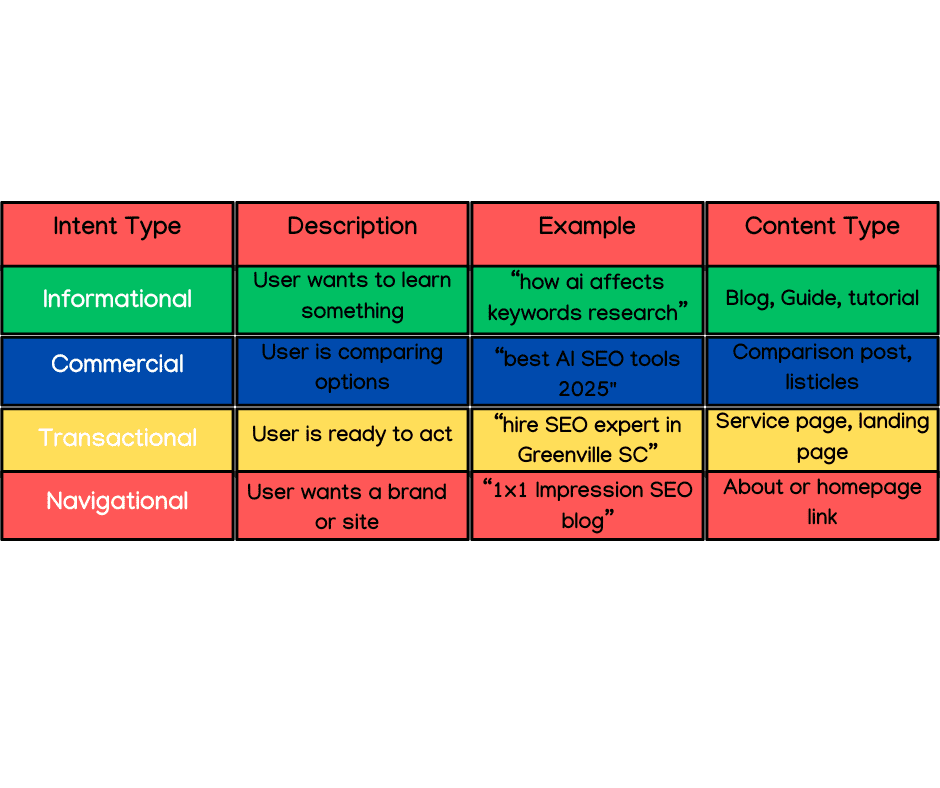
4. Focus on Search Intent Above Everything
Every keyword you target should match the intent behind the search. AI is getting smarter about this every month.
Here’s how to simplify it:
5. Keywords Are Conversations Now
AI has made search language more natural. People type or speak in complete thoughts, not short phrases.
That means your keyword research should include long-tail conversational phrases that reflect how people actually talk.
For example:
- Old style: “SEO tips”
- New style: “what are the best SEO tips for small businesses in 2025”
Use these conversational queries in headers and FAQs to help AI models connect your content to modern search behavior.
6. Don’t Forget Entity Keywords
Entity SEO is one of the biggest ranking factors in 2025.
Entities are specific people, places, products, or concepts that Google recognizes as “things.”
For example, instead of writing “SEO tools,” mention “Surfer SEO,” “Clearscope,” or “Frase.”
Instead of “AI models,” mention “Gemini,” “ChatGPT,” or “Claude.”
The more entity-rich your content, the easier it is for AI to associate your site with real-world authority.
7. Build With Long-Term Data, Not One-Off Trends
Trendy keywords spike fast and fade even faster.
The goal is to build content around consistent themes that evolve with time.
Use your analytics to identify which content topics consistently attract users.
Then expand those with updated examples and refreshed insights every quarter.
Google favors sites that keep content alive instead of publishing and abandoning it.
8. Use AI Tools Wisely
AI can save hours of manual keyword sorting if you use it strategically.
Here’s how:
- Use ChatGPT to group keywords by intent or theme.
- Use SEMrush or Rank Tracker to analyze difficulty and opportunity.
- Use Google Trends to spot seasonal changes and emerging search behavior.
The goal is not to let AI do the thinking — it’s to use it as a research partner that expands what you can see.
FAQs
1. Is keyword research still necessary with AI?
Yes. AI changes how keywords work but doesn’t remove them. Keyword research now focuses on context, search intent, and topical authority.
2. What tools are best for keyword research in 2025?
Use a mix of traditional tools like SEMrush and newer AI-driven tools like Perplexity, ChatGPT, or Rank Tracker for broader insight.
3. How many keywords should I target per post?
Focus on one main keyword, a few secondary variations, and supporting entity keywords. It’s about coverage, not quantity.
4. What’s the biggest mistake people make in keyword research now?
Relying only on volume or difficulty. In 2025, search intent and topical fit are far more important for long-term rankings.
5. Can AI help write SEO-optimized content?
AI can help outline and structure your content, but human expertise, examples, and perspective make it rank and convert.
Keyword research hasn’t died. It’s evolved.
The winners in 2025 are the ones who stop chasing search volume and start building authority.
Your keywords should map to a larger strategy, one that connects topics, intent, and real experience.
Stay consistent, refresh often, and let AI help you spot what others miss.
If you’re ready to stop guessing and start ranking, let’s map out your AI-optimized SEO plan.
We’ll identify the right topics, clusters, and keywords to position your business as the authority in your space.
Schedule your SEO Strategy Call with 1×1 Impression